Women’s leagues in Canada, US, aim to take advantage of men’s World Cup
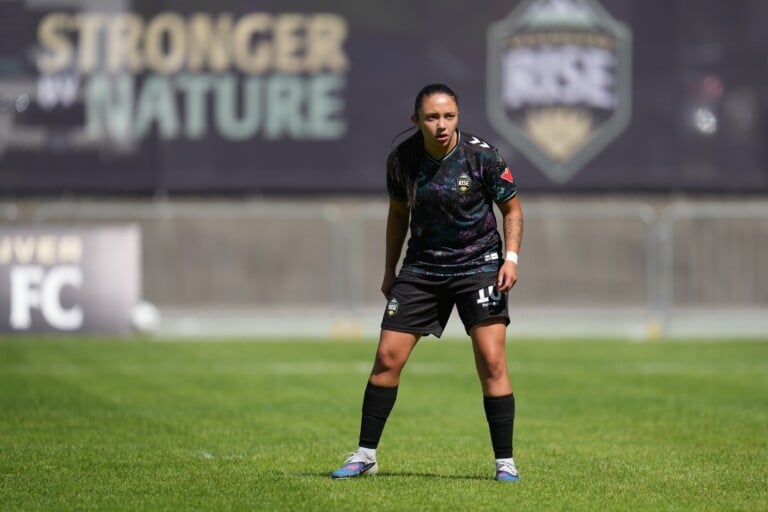
TORONTO (AP) — A throng of fans packed into York Lions Stadium on the outskirts of Toronto shortly after the start of the World Cup.
As drums beat, a girls soccer team chanted, “Two, four, six, eight! Who do we appreciate? Not the king, not the queen, just our favorite football team!”
The team on the receiving end of the enthusiastic support that day was AFC Toronto, part of the Northern Super League, Canada’s professional women’s league. The club drew about 2,500 fans to see Toronto take on the Montreal Roses the day after the Canadian men’s national team played Bosnia-Herzegovina to a 1-1 draw in the first World Cup match ever on home soil.
While other leagues in North America took long breaks during the World Cup, the NSL — in just its second year — continued play.
The National Women’s Soccer League returned to play this weekend, Major League Soccer is out until July 16 and the Canadian Premier League had a 16-day break before returning on June 26.
“It’s a whole other level when you’re hosting (the World Cup),” said Christina Linz, president of the NSL. “And so you can already see already an interest in soccer in a way that you don’t always see as much.”
Seizing the moment
While their strategy was different, the ultimate goal for women’s soccer is the same all over North America: Seize this moment to build excitement for the game. And that’s even more crucial for the fledgling NSL.
“The fact that we’re one of the few leagues playing in the world right now, those tickets that are relatively expensive for the World Cup, I think we are more affordable, and fans can catch a game,” AFC Toronto coach Marko Milanovic said. “Obviously the level is not the same, but the sport is. We just hope it brings more eyes to football, and football in this country.”
NSL players across the league agreed that having the World Cup co-hosted by the United States, Canada and Mexico is an opportunity for casual fans to discover there’s professional soccer – both men’s and women’s – they can watch year-round in their home cities.
“I hope that after the World Cup games they can be like, `Wow, that was really fun. I wonder if maybe there’s a local team I can go and watch?′ And that’s us, and we’re so fun to watch,” Vancouver Rise midfielder Nikki Stanton said.
The NWSL had a different approach, with watch parties and special matches like the Challenge Cup. Gotham FC will host The Queen’s Classic against the Washington Spirit on July 15 at Citi Field, which is expected to draw some 40,000 fans. Ahead of the game, fans will be able to watch a World Cup semifinal match in Atlanta on big screens at the ballpark.
“We’re anywhere and everywhere,” said Gotham spokesman Jeff Greer. “We’ve been able to find other ways to get involved, and we’ll continue to do that into July, and obviously the big game will be an exclamation point on that involvement.”
Chicago Stars marketing chief Kay Bradley said her NWSL club benefited from the city hosting the U.S. men in a send-off match against Germany, but the main goal is to use this World Cup as a springboard for the Women’s World Cup in Brazil next year, the 2028 Olympics in Los Angeles and the 2031 Women’s World Cup.
“That is what’s really exciting, kind of coming from the club side. Partners are engaging and figuring out how they can best work with us and partner with us and engage fans,” Bradley said. “We’re figuring out what’s working and what’s not working and what is driving interest and excitement, so it’s a really good way for us to kind of test drive.”
Continued growth
While the World Cup being in North America is helping plenty, the NWSL and NSL are also benefiting from soccer becoming more popular in both the United States and Canada.
Jonathan Lintner, vice president of marketing and communications for Racing Louisville, said he felt as though soccer was much more isolated when he was growing up, but he’s seeing more access to the sport now.
“Every time we have a World Cup, we reach a percentage more of people into acceptance of soccer as a big sport here in the United States, and so much is made of, like, ‘It’s the biggest sport in the world – why is it not more popular in the U. S.?’” he said. “But that gap has closed, I think, more than we’re all maybe noticing.”